

RAM prices – both DDR4, What DDR5 – have entered a phase of rapid growth, which can no longer be explained by seasonality or temporary stock shortages. From the end of 2025. The market came under strong pressure from demand from data centers and AI-based projects, which quickly impacted the availability and prices of consumer modules.
This is not a single anomaly, but the result of a deeper shift across the entire memory supply chain. DRAM manufacturers more and more clearly they favor server contracts and HBM class solutions, and the average user – from people assembling a PC to companies planning to modernize their equipment – begins to feel consequences of this decision. In this article, we look at the facts, the real causes of the increases, and what to expect in 2026 and beyond.
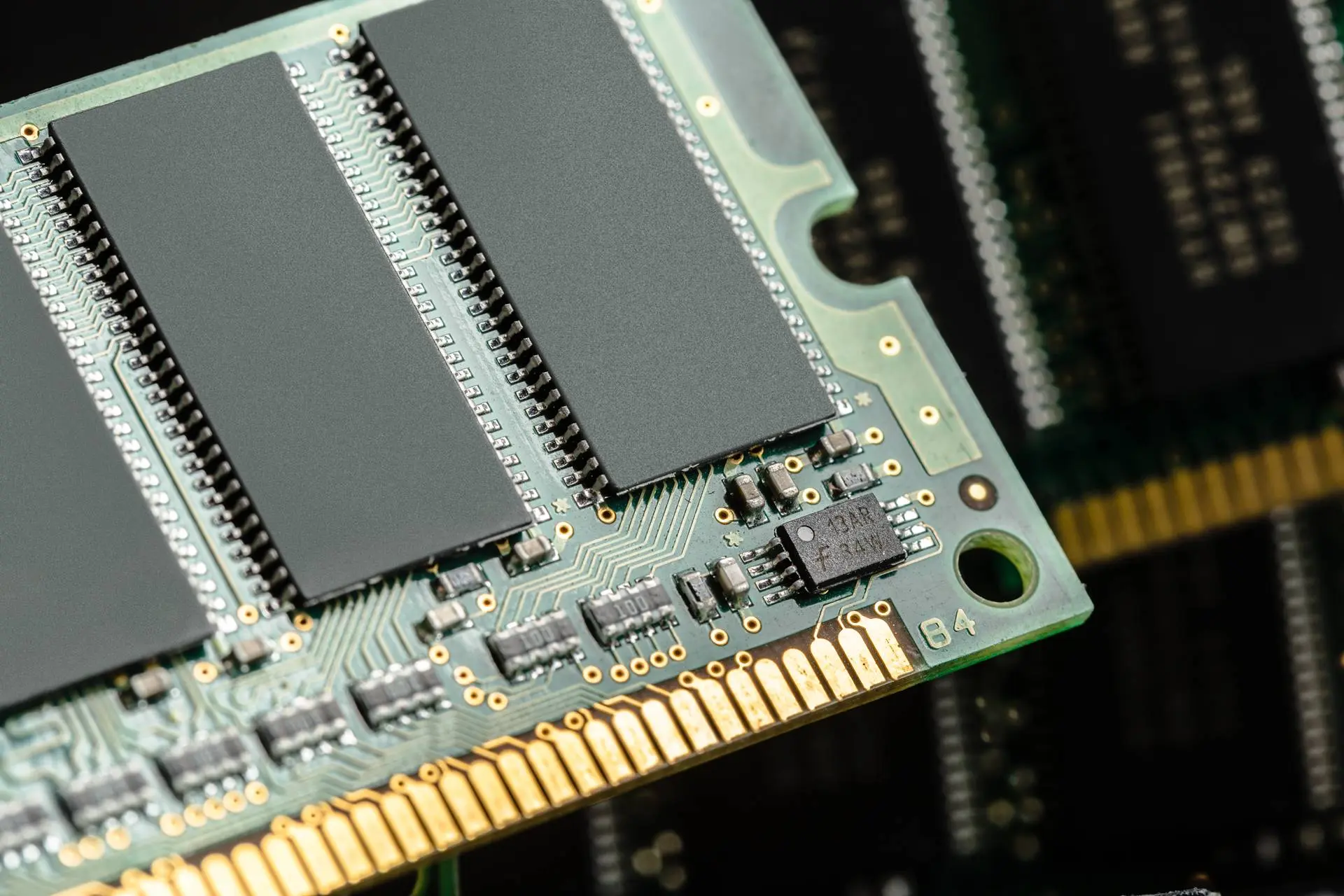
What happened – and how much RAM prices have gone up
Prices will be higher in the summer of 2025 RAM were relatively stable, but since October the trend has clearly accelerated. Polish market observations speak of approx. 20% increase over several weeks, and in comparison to July-August, the jumps for some popular modules reached 80-90%.
The most visible effect is the "price shock" in the DDR5 segment – both in comparison sites and in reports from manufacturers operating in the consumer market. Goodram (Wilk Elektronik) points out that module prices have doubled, tripled, or even quadrupled in recent weeks, with examples from the Polish market showing increases of over PLN 1,000 on a single product.
For the record – a few specific points of reference:
• DDR5 32GB (Goodram) - ok. 240 PLN in the summer of 2025 vs. over PLN 1,000 more expensive in December (the lowest offers on price comparison websites).
• DDR5 64GB (Goodram) – the difference between July and December reached up to approximately PLN 2,000.
• Globally: DRAM contract prices were expected to increase by 171,8% year on year (as of Q3 2025 according to cited industry reports).
• Tom's Hardware also pointed out that "mainstream" DDR5 was already at least twice as expensive than in July 2025, suggesting that the wave of price increases was not just a local phenomenon in one market.
In practice, this means that RAM – a component that has been relatively predictable in price for years – has entered a phase of rapid and uneven price increases, especially where the demand for DDR5 is highest (new PC platforms, newer generation laptops).
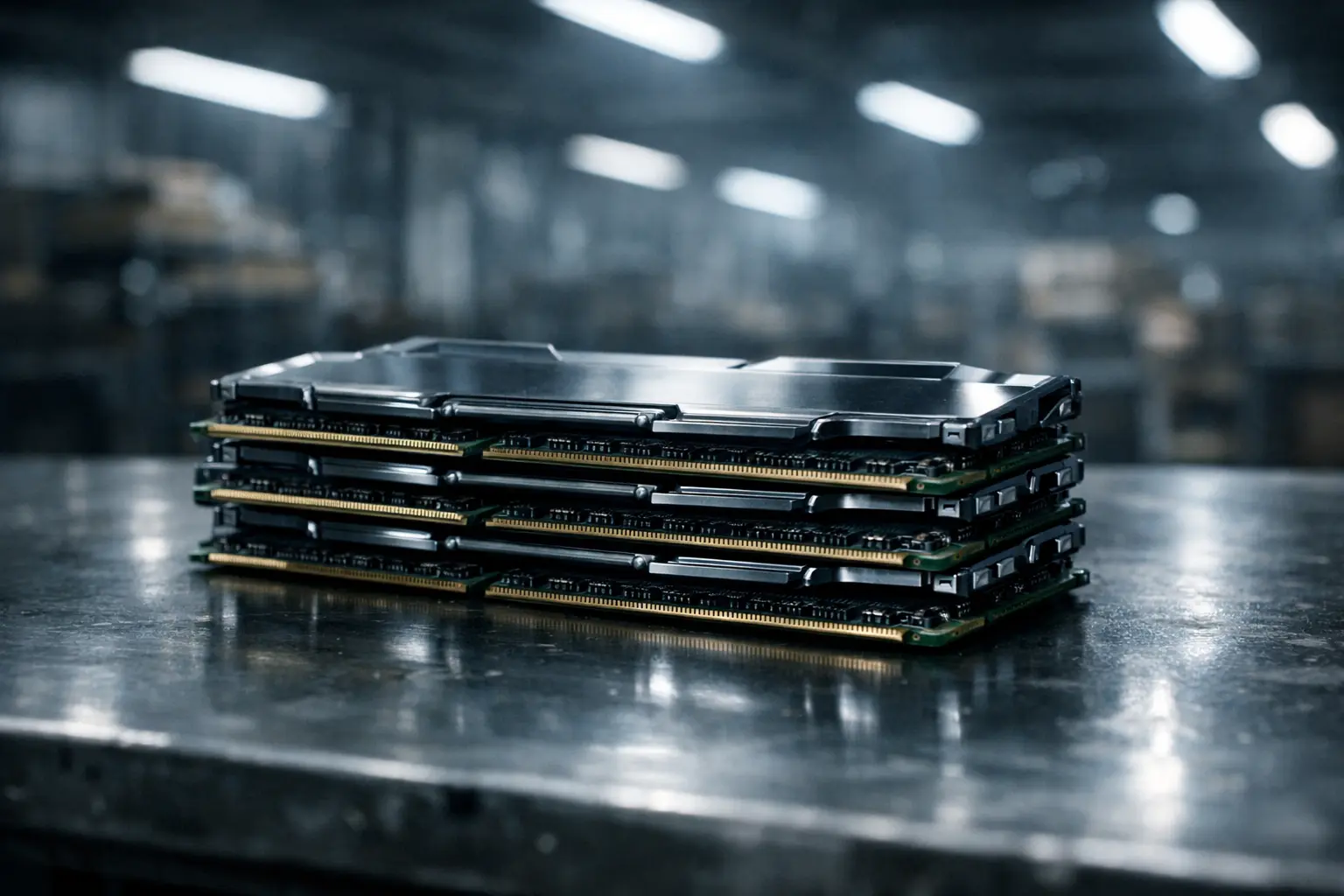
Why RAM is getting more expensive – the mechanics of the „domino effect”
The simplest way: RAM prices have increased because the memory market has ceased to be "for everyone" and has become "for those who pay the most"„. The AI boom has caused data centers and cloud providers to reserve massive amounts of memory in advance, and DRAM manufacturers are redirecting capacity to where margins are highest. This triggers a domino effect that ultimately leads to higher DDR4/DDR5 prices in stores.
1) AI doesn't need "a little RAM" - it needs it in bulk
Training and running AI models requires working with massive data sets. For such systems to operate quickly, infrastructure is essential. a lot of memory – and not only „ordinary DRAM”, but also HBM (High Bandwidth Memory), which is memory with very high throughput used in AI accelerators. As this segment grows, memory becomes a strategic resource – and companies begin to compete for supplies.
2) Manufacturers are shifting capacity to HBM and server DDR5
Factories can't simply add new production lines overnight. If demand for HBM and server memory grows faster than supply, manufacturers are making a rational business decision – they allocate capacity where there is greater profit and larger contracts. This is clearly described by Polish sources: part of the line is going to HBM and DDR5 for servers/AI, while production for consumers is relatively limited.
3) The RAM domino effect
Memory prices in a large part of the market are set at contracts (large customers, large volumes). If manufacturers raise DRAM/NAND contract prices, over time this translates into:
• manufacturers of laptops and pre-built PCs,
• distributors and stores,
• and finally on you as the buyer of DDR4/DDR5 modules.
x-com clearly indicates that increases in contract prices are affecting retail prices and that this trend is expected to continue in 2026.
4) The consumer market is no longer a priority
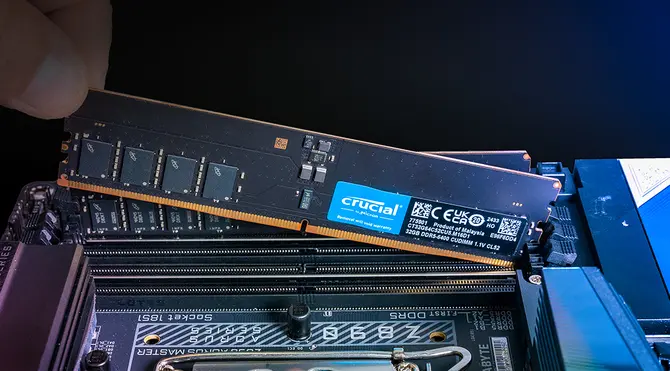
Demand pressures are compounded by strategic moves. Example: Micron announced its exit from the Crucial consumer business, maintaining deliveries only until the end of February 2026. This is a signal that resources and attention are going towards more profitable products (including for data centers) and not towards the consumer market.
And even if the industry starts investing more heavily in new factories, time works against consumers: analyses indicate that the new capacity will not immediately "relieve" the market, and the prospect of 2027 as the moment of supply improvement appears in reports on the memory and electronics market.
Conclusion in one sentence: RAM is getting more expensive not because "stores are increasing their margins", but because the same production raw material (memory) is much more needed and more profitable today in AI and data centers – and the consumer market gets less and more expensive.
What manufacturers are doing and why it's making the problem worse (using Micron as an example)
The increase in RAM prices is not just a side effect of the AI boom. specific decisions of memory manufacturers, which are rational from a business point of view, but for the consumer market mean less availability and further price pressure.
The biggest players – SK Hynix, Samsung and Micron – they are increasingly focusing on data center memory. This primarily includes server-grade DDR5 and HBM memory, products used in AI accelerators. This is where the largest volumes are currently being shipped, and where margins are highest.
In practice, this means redirection of production capacity. Lines that until recently produced memory for laptops and home computers are gradually being adapted to handle more advanced and more expensive orders. For manufacturers, this is a logical move – demand is guaranteed, contracts are long-term, and the risk is lower than in the retail market.
This change was also signaled by strictly market decisions. Micron announced the withdrawal of the brand Crucial from the consumer segment, limiting deliveries until early 2026. This is a clear message: the home market is no longer a priority, if the same resources can work for the needs of AI and large enterprise clients.
The problem is that such decisions they act as an amplifier the whole phenomenon. Since:
• less memory is reaching the consumer market,
• Contract prices from manufacturers are rising,
• and there are no alternative sources of supply,
Stores and distributors have no real room for price competition. Even with good will, they can't absorb price increases, because the problem isn't margins, but rather the availability of goods at the source.
As a result, producers – not intentionally, but consistently – deepen the problem of high RAM prices, focusing on where the heart of the technology market beats today: data centers and artificial intelligence-based projects. The consumer market must adapt to this new hierarchy.
Where is the RAM price increase felt the fastest?
The increase in RAM prices did not stop at the shelves with the modules themselves. RAM is one of the key hardware costs today., so when prices rise, the effect quickly spreads to other device categories. And importantly, not everyone experiences this at the same time.
Users assembling and upgrading computers
The first group to notice the problem are those building or upgrading computers. For them, the price increase is brutally obvious – the same memory kit that was a "reasonable choice" a few months ago can now cost several hundred or even over a thousand zlotys more.
DDR5, which until recently was considered a natural progression for new platforms, has begun to be treated as a luxury component. The result? Some users:
• postpones modernization,
• goes down to smaller capacities,
• or reverts to older configurations, if still possible.
Laptops and pre-built computers are getting more expensive with a delay – but consistently
In the case of laptops and pre-built computers, the increases are not so sudden, but more systematic. Hardware manufacturers rarely change prices overnight – instead:
• new deliveries are already coming in at higher prices,
• cheaper configurations disappear,
• and the "successor" of a given model starts at a higher price than its predecessor.
This is why many people feel like "hardware has simply gotten more expensive," with no single, definitive turning point. RAM is one of the main culprits here, even if it's not always listed as a separate cost item in specifications.
Smartphones, SSDs, gaming equipment
RAM and storage are the common foundation for a vast portion of consumer electronics. When manufacturers reduce capacity or raise prices at the source, the pressure is also shifting to other segments:
• smartphones (especially models with more RAM),
• SSD media,
• consoles and gaming equipment,
• premium devices where memory is a significant cost element.
This doesn't always mean an immediate price increase, but it's often seen in lower-end configurations or a slower price decline for older models.
Companies in the context of IT infrastructure
For businesses, the problem isn't always a single, expensive RAM purchase. More often, it's total cost of infrastructure refreshment:
• new laptops for employees are more expensive than planned,
• servers and workstations "eat up" the budget faster,
• modernization projects are postponed or limited in scope.
In practice, this means that expensive RAM influences purchasing decisions much more widely than just among hardware enthusiasts.
Conclusions
The common denominator is simple: RAM is no longer a cheap, predictable component, and has become a resource for which completely different worlds compete – home users, companies and global data centers.
While prices aren't rising at the same rate everywhere, the trend is common. Where RAM is a key cost element, increases appear faster. Where it's "hidden" in the finished product, they arrive slower but are harder to avoid.
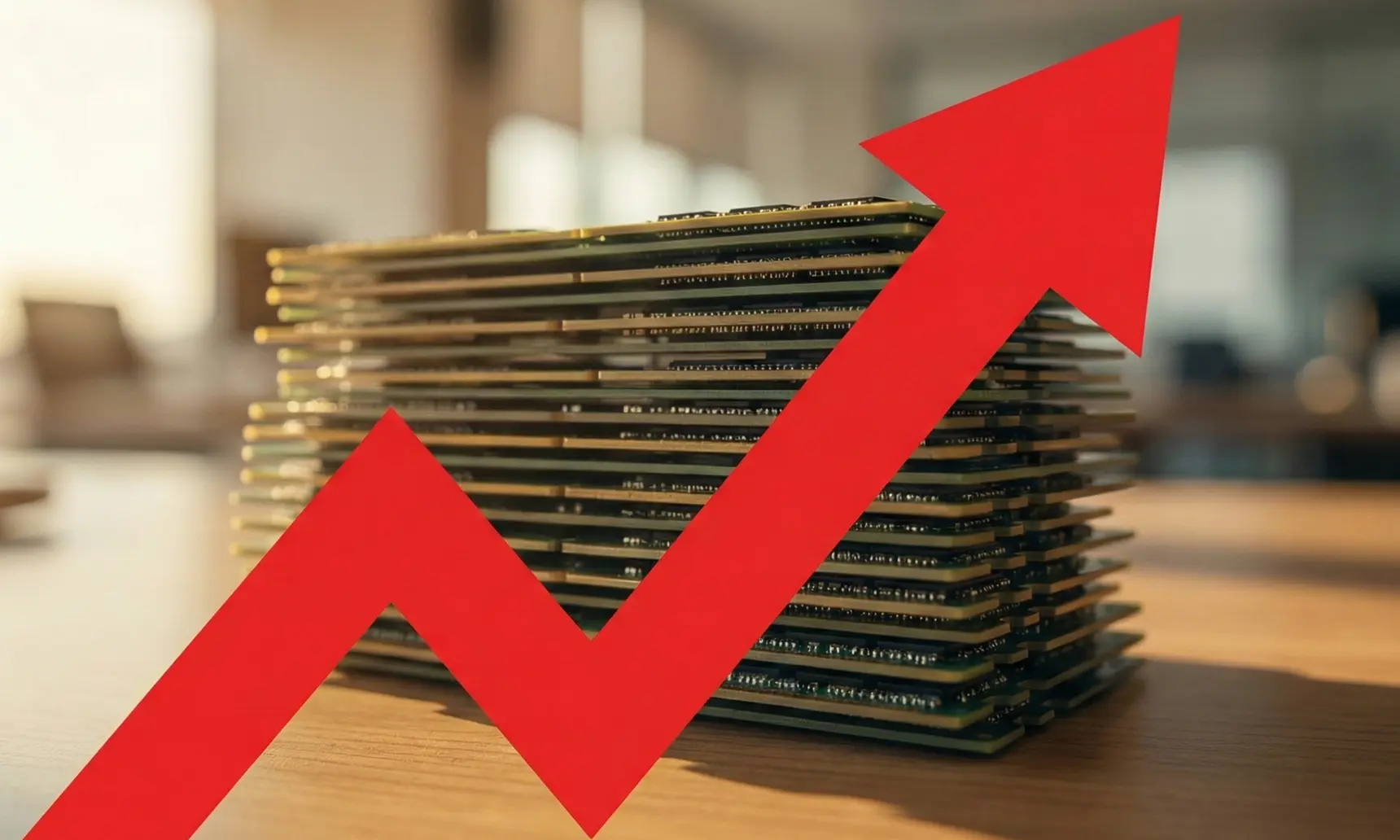
Forecasts for the coming years – when can we expect prices to drop?
2026 rather won't bring quick relief. TrendForce predicts that already in Q1 2026 contract prices of "regular" DRAM (i.e. the one from which DDR4/DDR5 modules are ultimately made) may increase about 55-60% sq./sq., and server DRAM even by over 60% sq/q. This is important because contract prices usually translate into details and prices of finished devices with a delay.
The second half of 2026 may look better mainly in terms of the pace of growth, not necessarily declines. Reuters cites expectations that the tight market may persist also after 2026., and some analysts talk about a "supercycle" that may continue.
The most realistic moment of „breathing” is 2027 – if new powers actually enter. The Financial Times points out that the industry has limited capacity and new plants/larger capacities will not appear quickly – the text says that the new factories will not be ready at least until 2027. This suggests: before that there may be at most stabilization, and not a return to the "old prices".
What about 2028? It gets less "hard" here, because reliable sources talk more often about stabilization and improvement of supply around 2027, than about specific price levels in 2028. The fairest conclusion for today: if AI demand maintains the current pace, declines may be slow and uneven, and "cheap memory like it used to be" doesn't have to return anytime soon – even if the market stops growing. (This is an interpretive conclusion based on the direction of demand/supply forecasts, not a price promise.).
Current price increase RAM This isn't a temporary market "bump" or the result of retail speculation. It's the consequence of a profound shift across the supply chain – memory has become a strategic resource for data centers and AI projects, and the consumer market must compete for the same production capacity. As a result, DDR4 and DDR5 are getting more expensive, availability is limited, and forecasts indicate rather slow stabilization rather than a quick return to old prices.
For users and businesses, this means one thing: hardware decisions in 2026-2027 require greater caution and planning. The timing of purchase, configuration selection, and scope of upgrades can have a much greater impact on budgets today than they did just a year ago.
If you are planning to expand or replace your equipment and want to approach it rationally – without buying at the worst possible price point – we can help you choose sensible configuration and plan purchases to limit the real cost to the company or team.