

At the end of December 2025, the Ministry of Digital Affairs presented an action plan for 2026-2027, which aims to accelerate the construction of a secure and friendly digital state. The document, officially published on gov.pl, sets specific directions for development – from artificial intelligence and cybersecurity, through new e-services, to massive investments in digital competences.
The announcements are not intended as general declarations. They include:. AI factories, implementation of EU regulations AI Act and NIS2, mandatory e-Delivery from January 1, 2026. and expansion of mObywatel Towards a European digital identity. For citizens, businesses, and governments, this means real changes in the way we use public services and technologies.
Below we have collected the most important elements of the plan. Ministry of Digital Affairs – briefly, specifically and with an emphasis on what may actually affect the daily functioning of the state, business and users in the next two years.

The Ministry of Digital Affairs published December 31, 2025. action plan for 2026-2027 under the slogan "„In the digital state life is better”This is an official announcement of the direction the state wants to take in the next two years – with an emphasis on practical effects for citizens, the administration, and the economy.
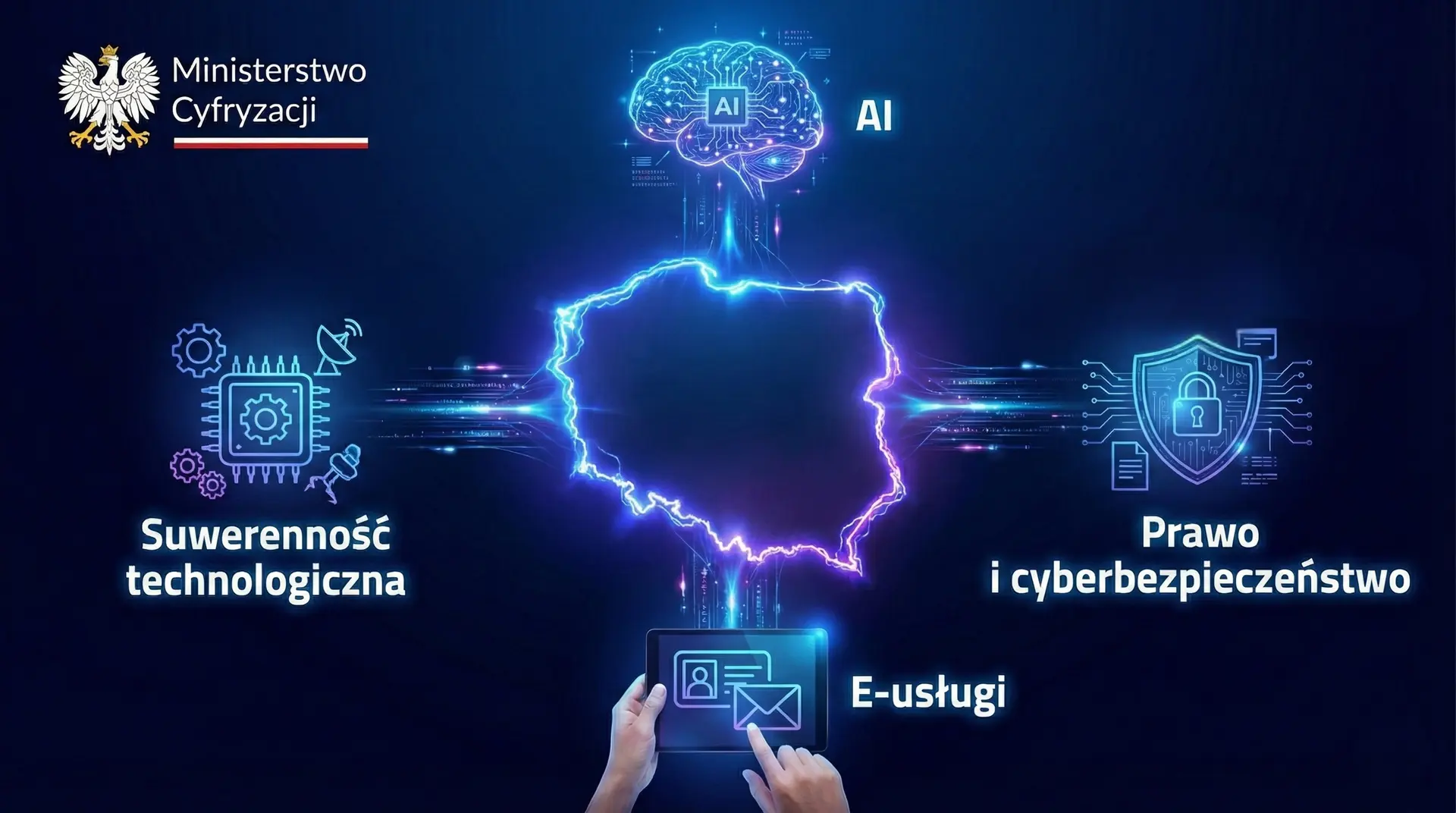
In the document, the Ministry of Digital Affairs focuses on four pillars: the development of artificial intelligence (including infrastructure and principles of its application), strengthening cybersecurity, and expanding e-services and digital competences. Specific elements include the AI factory project. in Poznań (PLN 200 million from EU support) and the announcement of the launch of the first AI regulatory sandbox by August 2, 2026, so that companies can test solutions in controlled conditions.
At the same time, changes are being introduced that will affect everyday contact with offices: from 1 January 2026, e-Delivery will become the basic channel of electronic communication between public entities and citizens and companies (with exceptions where the regulations provide for other procedures).
What will the digital state actually change – key points of the Ministry of Digital Affairs plan
The Ministry of Digital Affairs' 2026-2027 plan isn't a collection of general slogans. It's a set of specific initiatives that simultaneously streamline the law, build infrastructure, and prepare the administration and market for the more intensive use of technology. The key elements can be divided into four coherent areas.
Artificial Intelligence: From Declaration to Infrastructure
The state wants to move from the experimental stage to a real technological base. A key element is AI factories – specialized computing and research centers. The first one is being built in Poznań (with confirmed EU funding), the second one is planned for Kraków. At the same time, the launch of first AI regulatory sandbox – until August 2, 2026. Companies and institutions will be able to test AI-based solutions in a safe, controlled environment, before the AI Act requirements fully come into force.
Law and Cybersecurity: Tougher Rules, Bigger Money
The second pillar is the implementation of EU regulations – AI Act and NIS2 – through an amendment to the Act on the National Cybersecurity System. The Ministry announces record financial outlays in this area and a significant strengthening of oversight of digital security. In practice, this means new obligations not only for the administration but also for companies deemed crucial or important to the functioning of the state and the economy, including in the context of supply chains.
E-services: digital contact with the state as standard
The plan assumes further digitalization of public services, but with a clear emphasis on universality. January 1, 2026 e-Delivery are to become the primary electronic communication channel between public entities and citizens and companies. In parallel, mCitizen, which is to evolve towards European Digital Identity Wallet, enabling the confirmation of identity and rights also in cross-border relations.
Competence and technological sovereignty
The fourth element is investment in people and educational facilities. In 2026, KPO funds are planned to provide 100,000 remote learning kits and launch 16,000 AI and STEM laboratories in schools. At the same time, the administration is to be trained in the safe and practical use of new technologies. This is complemented by actions at the EU level, including the implementation of the Gigabit Infrastructure Act and initiatives supporting the export of Polish technologies, such as IC Team.
Together, these elements demonstrate that the MC plan isn't limited to a single project or application. It's an attempt to simultaneously organize law, infrastructure, competencies, and services—so that the digital state operates not only faster but also more securely and predictably.
Why is it important?
The Ministry of Digital Affairs' plans for 2026-2027 mark a transition from individual projects to a coherent, long-term digital transformation of the country. For the first time, infrastructure (AI, networks), law (AI Act, NIS2), public services, and competencies are being combined in a single package – instead of being developed separately, they will be improved in parallel.
For citizens, this means fewer "digital exceptions" and more standards: e-Delivery as the default form of contact with offices, and mObywatel being developed towards a European digital identity. Digitization is intended to cease being an add-on and become the primary way of doing things.
For companies and institutions, this is a clear signal that technologies like AI and cybersecurity are entering a regulated and enforced phase. Regulatory sandboxes provide a testing ground, but at the same time, NIS2 and the amendment to the KSC raise the bar for accountability and resilience to threats.
In a broader context, the plan strengthens Poland's position in the EU – not only as a technology user, but as a country building its own computing resources, competencies, and export solutions. This is the difference between digitization "for the sake of the moment" and an attempt to build true technological sovereignty.
What's worth watching next?
While the direction of the Ministry of Digital Affairs' actions is clearly outlined, many key elements have yet to enter the implementation phase. The pace of legislative work on implementation will be crucial in the coming months. AI Act and the amendment to the Act on the National Cybersecurity System – these will determine how quickly the announcements will translate into real obligations for the administration and companies.
Investment details also remain an open question, especially in the case of the second one. AI factories planned in Krakow. Unlike the project in Poznań, the scale of financing and the timeline have not yet been disclosed, which will be an important signal for the market and the research and technology community.
It is also worth following the practical implementation of the announced e-services – especially e-Delivery from 1 January 2026, and the development mCitizen towards a European digital identity. It is at the stage of everyday use that we will first see whether the digital state will actually become simpler and more accessible, and not just better described in documents.